Author: Kris Cole
Part 4 of a six-part series on planning a successful year-end giving campaign.
Everything we’ve covered so far in this series has been preparation: setting goals, segmenting donors, testing technology, and exploring matching gift opportunities. November is when that preparation begins to pay off. Your year-end campaign moves from planning to action, first through personal outreach to your most loyal supporters and then with a public launch on GivingTuesday.
These two moments serve different purposes, and understanding that distinction can make a significant difference in your campaign’s success.
Start with Your Most Loyal Donors
Before your campaign goes public, your major and recurring donors should hear from you first. And what they hear should feel different from the appeal you’ll send to everyone else.
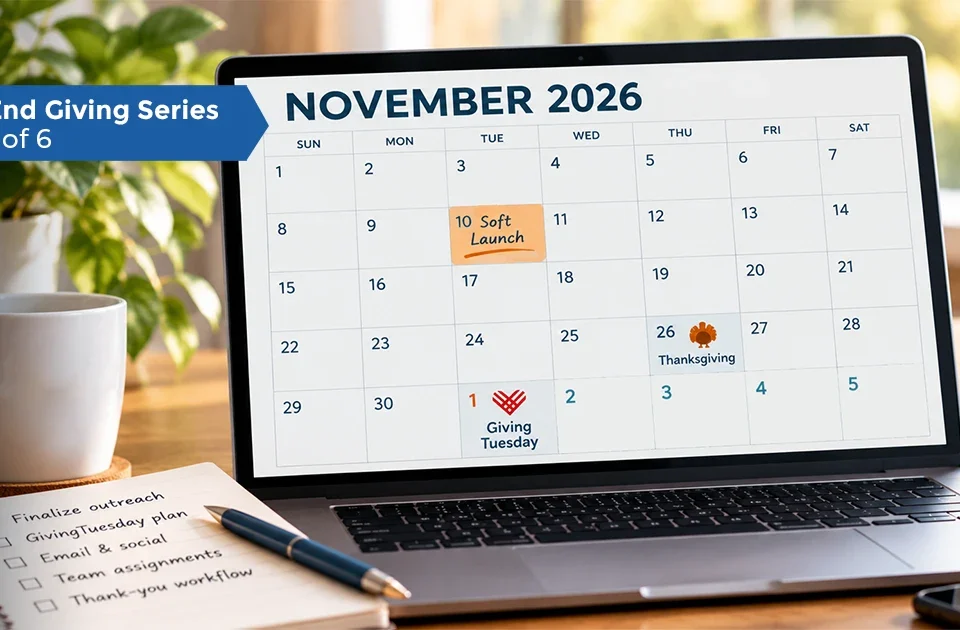
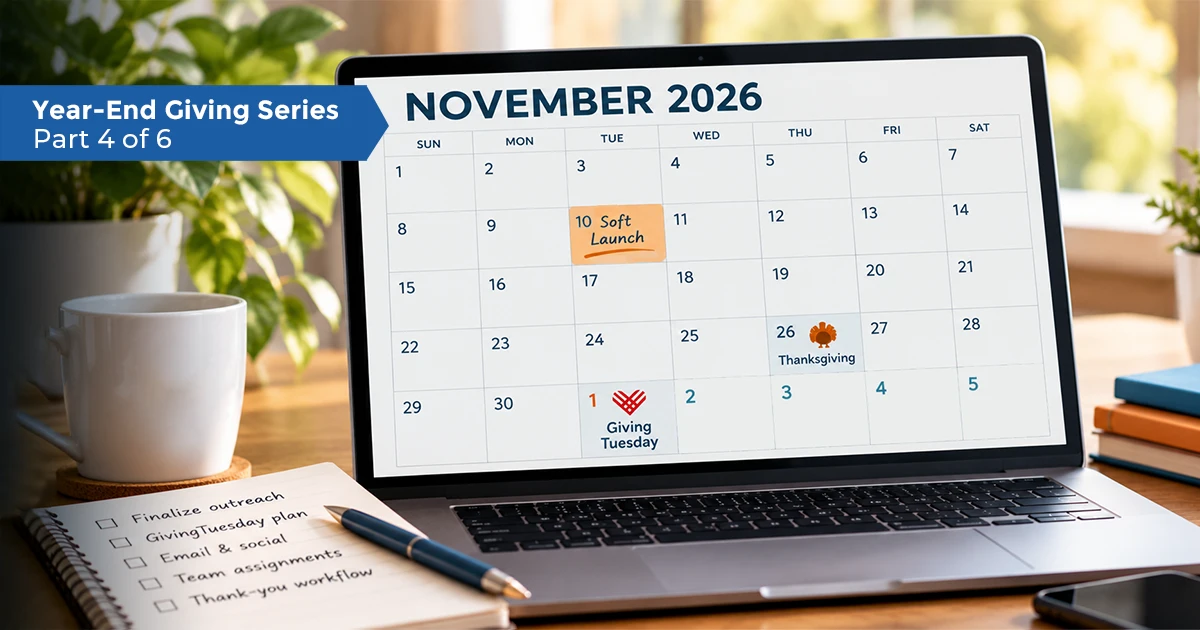
Think of your mid-November soft launch as an opportunity to express genuine appreciation, share an update, or offer a personal heads-up about the campaign ahead. This isn’t simply a scaled-down version of your public appeal. It’s a chance to strengthen relationships with the donors who have already demonstrated their commitment to your mission.
For recurring donors, consider sharing the cumulative impact of their support. Showing someone what their monthly gifts have accomplished over the past year can be far more meaningful than another generic thank-you. For major donors, a personal phone call or handwritten note may be more appropriate than an email.
The donor segments you developed in September should make this outreach easier to manage. Focus on three priorities:
- Identify your audience. Pull the major-donor and recurring-donor segments you’ve already established.
- Personalize your message. Emphasize gratitude and impact rather than urgency or another request for support.
- Get ahead of the holiday. Aim for the second week of November, before Thanksgiving preparations begin competing for your donors’ attention.
A thoughtful touchpoint now can help reinforce the relationships that will sustain your organization long after the year-end campaign ends.
Make GivingTuesday Count
GivingTuesday, the Tuesday after Thanksgiving, has become an important kickoff for year-end fundraising campaigns. In 2025, the movement generated $4 billion in donations in the United States, a 13% increase over the previous year, with 19.1 million people making financial contributions. Since its founding in 2012, GivingTuesday has generated a cumulative $22.5 billion for causes worldwide, according to GivingTuesday.1
Those numbers reflect an extraordinary level of generosity, but they also mean your organization will be competing with thousands of others for donor attention.
The key is to make it easy for supporters to understand your message and take action.
Keep your message consistent. Your website, email, and social media should reinforce the same campaign message and direct donors to the same giving page. GivingTuesday isn’t the time to introduce several competing appeals.
Highlight matching gift opportunities. If you secured a matching gift or challenge grant during October, feature it prominently. The opportunity to double the impact of a donation can provide a compelling reason to give now.
Have a day-of plan. Decide in advance who’s responsible for social media posts, monitoring your donation platform, answering donor questions, and responding to unexpected issues. GivingTuesday may be a digital campaign, but it benefits from the same coordination you’d give an in-person fundraising event.
Make recurring giving easy. Give donors a clear opportunity to become monthly supporters. Someone making a first-time gift on GivingTuesday may also be willing to establish an ongoing relationship with your organization.
Most importantly, remember that GivingTuesday is the beginning of your public year-end campaign, not the culmination of it. The attention and enthusiasm you generate should carry into December.
Don’t Overlook the Thank-You
It’s easy to become so focused on generating donations that donor acknowledgment becomes an afterthought. Yet what happens immediately after someone gives can be just as important as the appeal that inspired the gift.
Prompt, personal acknowledgment helps donors feel appreciated and reinforces their decision to support your organization. Research and fundraising experience consistently point to the importance of timely stewardship, particularly for first-time donors.
A useful goal is to acknowledge every gift immediately through an automated receipt and follow up personally with selected donors within 24 to 48 hours.
Before GivingTuesday arrives, make sure:
- Your donation platform sends an automated receipt and thank-you email immediately after a gift is completed.
- Your acknowledgment feels personal and meaningful, rather than simply confirming a financial transaction.
- Someone on your team is prepared to identify major gifts, longtime supporters, and other donors who warrant additional personal outreach.
And remember, not every donor should receive exactly the same follow-up.
One Gift, Two Different Donors
Consider two people who make gifts on GivingTuesday.
The first is a new donor who contributes $50 after seeing a friend’s social media post. The second is a longtime supporter who gives $500 and has contributed to your organization every year for the past decade.
Both deserve an immediate acknowledgment, but their relationships with your organization are very different.
For the first-time donor, your follow-up is an opportunity to introduce your organization more fully. Explain how their gift will make a difference, invite them to follow your work, and help them feel connected to the mission they’ve just supported.
For the longtime donor, a personal note or phone call from a board member or staff leader may be especially meaningful. After ten years of loyalty, that donor deserves to know their commitment hasn’t gone unnoticed.
This is where the donor segmentation work you completed earlier in the fall becomes particularly valuable. You’ve already identified your audiences. Now you can put that information to work in ways that strengthen relationships rather than simply process transactions.
Carry the Momentum Into December
By the end of November, your year-end campaign should be fully underway. Your public messaging is reaching donors, matching gift opportunities are helping inspire action, and your team is responding promptly to contributions.
But the work is far from over.
December brings new opportunities to build urgency, reconnect with supporters who haven’t yet given, and make the most of the year’s final days. The relationships you’ve strengthened in November, along with the momentum generated by GivingTuesday, provide a strong foundation for that final push.
The goal isn’t simply to raise as much as possible on one Tuesday. It’s to use that moment of generosity to build lasting donor relationships and finish the year strong.t—but it’s what makes everything visible to a donor next month actually land well.
Next in this series: December — Momentum and the FInal Push. We’ll explore how to sustain donor engagement through the month, prepare for the critical December 29-31 giving period, and begin the stewardship work that carries into the new year.
Put Your Year-End Plans Into Action
Need help keeping your campaign on track? Our free Year-End Giving Marketing Calendar template makes it easy to organize your audiences, messages, channels, responsibilities, and deadlines—all while keeping your donors at the center of your communications. Download the free template in Microsoft Excel or Microsoft Word format and customize it for your organization.
- Generosity Sweeps the Globe: Participation and Donations Rise on Another Record-Breaking GivingTuesday — GivingTuesday, Dec. 3, 2025 ↩︎