Author: Kris Cole
Part 3 of a six-part series on planning a successful year-end giving campaign.
By now, if you’ve been following along, you’ve got a documented goal grounded in last year’s real numbers and a donor list split into meaningful segments. That’s the strategic half of “Planning and Prep.” This month is the operational half: making sure the technology behind your campaign can actually handle what’s coming, and getting corporate matching gifts moving before the season gets too busy to chase them properly.
This is the month people are most tempted to skip. Nothing here is donor-facing yet, so it’s easy to let it slide in favor of writing appeal copy or planning the GivingTuesday social calendar. Don’t. A broken donation page in November costs you real gifts you’ll never get back, and a matching gift conversation started in December is often a matching gift conversation started too late.
Test Your Donation Page Like a Skeptical Donor
Here’s the uncomfortable number: donation pages convert at roughly 11% on desktop and just 8% on mobile—meaning somewhere around 9 in 10 visitors who land on your donation page leave without giving.1 Some of that is unavoidable (people browsing, not ready to give yet). But a meaningful share of it is fixable, and October to early November is the time to fix it before the traffic arrives.
Mobile deserves particular attention. In 2024, 45% of all online donation transactions happened on mobile devices, and mobile accounted for 53% of nonprofit website visits overall—even though the average mobile gift ($79) still trails the average desktop gift ($118).1 That gap is often a symptom of a clunky mobile checkout, not smaller donor intent. Organizations with a genuinely responsive, mobile-optimized donation experience see 126% more donations on mobile than those without.1
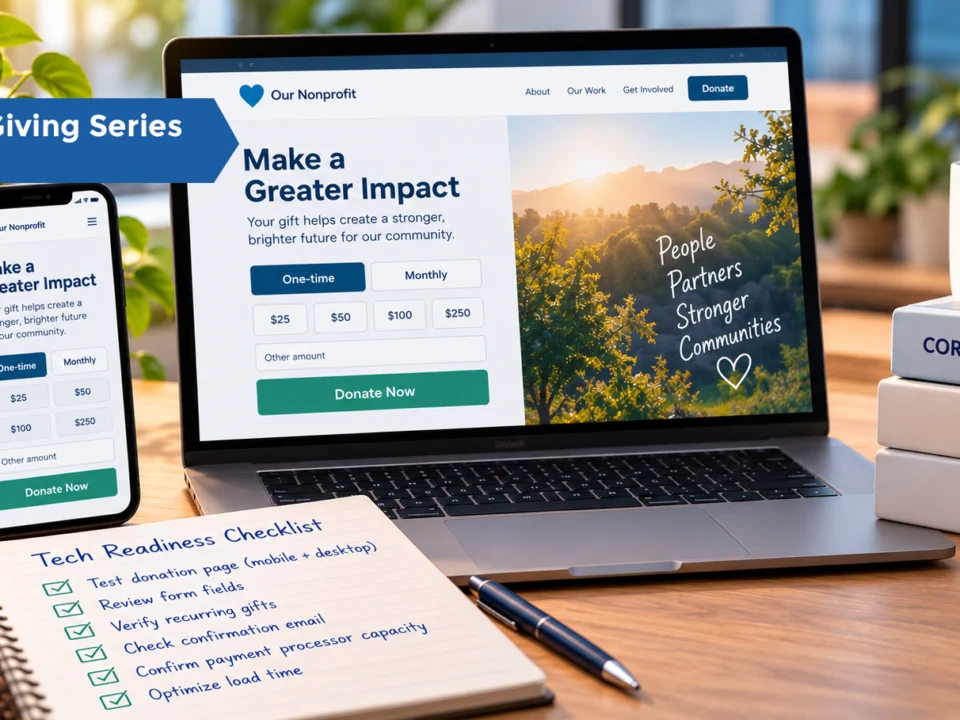
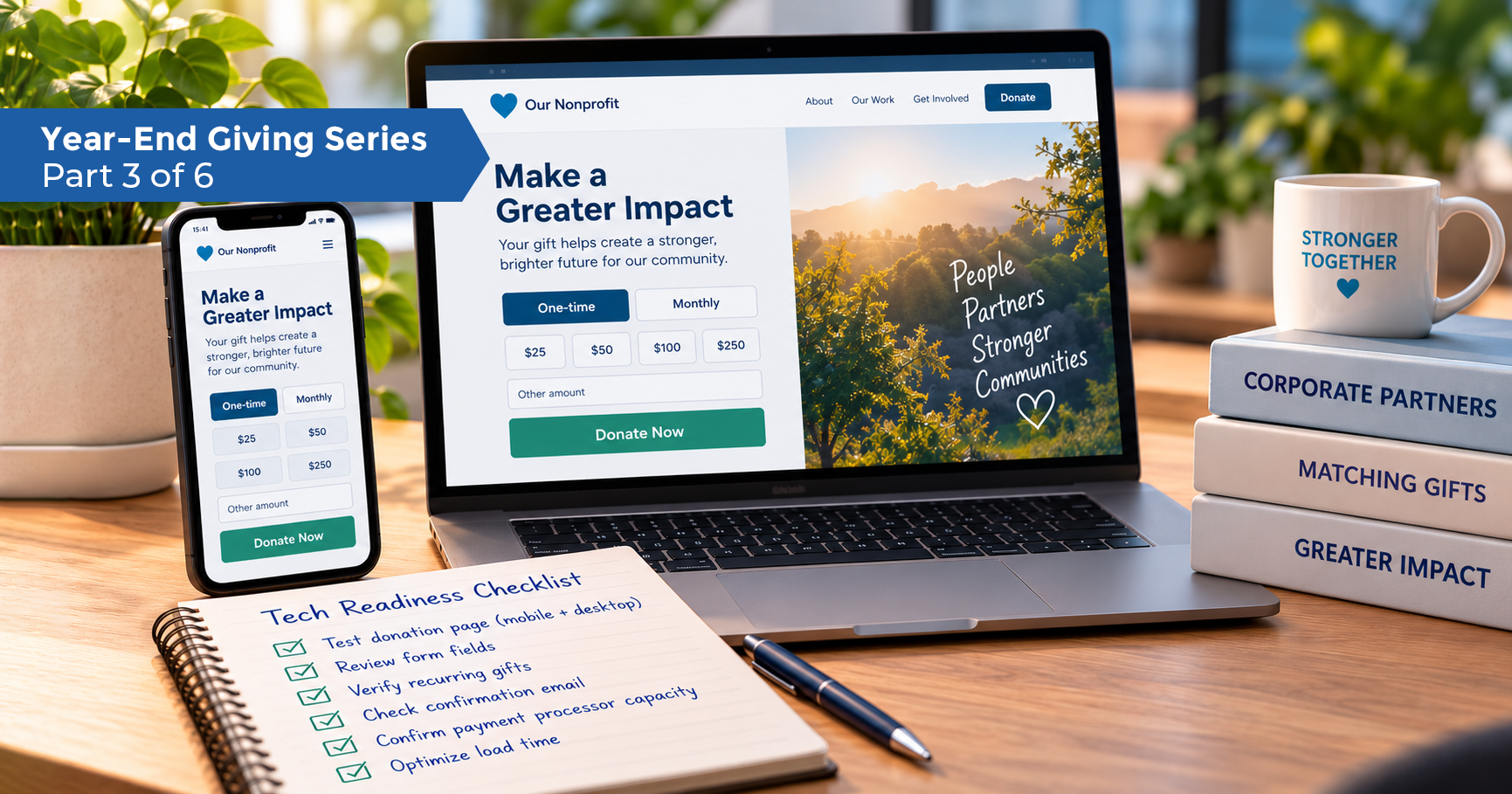
Work through this list before mid-November, ideally by having someone unfamiliar with the page actually try to complete a small real donation, start to finish:
- Load the donation page on an actual phone, not just a resized browser window.
- Count your form fields. Every additional field is a small tax on conversion—ask only for what you truly need.
- Confirm the recurring-gift option is visible and actually creates a recurring gift, not a one-time charge.
- Send yourself the automated confirmation email/receipt and read it as a first-time donor would.
- Ask your payment processor directly whether your account is provisioned to handle a GivingTuesday- or December 31-sized traffic and transaction spike—don’t assume the answer is yes.
- Check page load time; heavy images or pop-ups that are a minor annoyance in June can tank your conversion rate in a high-traffic December.
The End-of-Year Giving Toolkit’s Website & Technology Readiness Checklist from Part 1 of this series covers this same ground in a form you can actually check off—worth working through this week if you haven’t already.
Corporate Matching Gifts: The Money Already on the Table
If there’s one piece of “Planning and Prep” with the highest return for the least effort, it’s this one. An estimated $4 to $7 billion in matching gift funds goes unclaimed every year, even though roughly $2.86 billion is successfully donated through matching programs annually.2 Put differently: at the average nonprofit, only about 1.31% of donations actually get matched, despite roughly 10% of individual gifts being match-eligible in the first place.2
The gap isn’t a lack of corporate generosity—65% of Fortune 500 companies offer a matching gift program, and one industry survey of large companies found over 92% offer some form of gift-matching.2 The gap is donor awareness: 78% of donors don’t know whether their employer offers a matching program, and only 8% fully understand how to actually submit one.2 That’s an information problem your campaign is well positioned to solve.
A few concrete moves you can make:
- Ask directly, on the donation page and in the receipt. A simple “double your impact—check if your employer matches gifts” prompt, ideally with a company-name lookup tool, closes a huge share of that awareness gap.
- Identify and reach out to known match-eligible major donors individually. If you know a major donor works for a company with a matching program, a direct heads-up (not just a generic web prompt) meaningfully increases the odds they follow through.
- Pursue a challenge grant or matching gift for the campaign itself, separate from individual employer matches. A board member, longtime major donor, or corporate partner willing to match gifts dollar-for-dollar up to a set amount during GivingTuesday or (preferably) the final December push is one of the single most effective urgency tools available to you—”your gift is doubled right now” performs better than almost any other line in a year-end appeal.
- Start now, don’t wait. Matching gift and challenge grant agreements routinely take 6 to 8 weeks to finalize once you factor in internal approvals on the funder’s side. A conversation started today can realistically be in place for the end of year launch; a conversation started in late November likely can’t.
The toolkit’s Corporate Matching Gift Tracker is built for exactly this—log every prospective match or challenge gift conversation now, with a target close date, so nothing falls through in the scramble ahead.
A Quick Example
Say a longtime major donor works at a company you know offers matching gifts, but they’ve never actually used it—not out of reluctance, just because nobody ever mentioned it applied to them. A short, specific note in October (“I noticed [Company] matches employee gifts 1:1 — if you’re open to it, your December gift could go twice as far”) takes five minutes to write and directly targets the exact awareness gap the data above describes. Multiply that across even a handful of donors and it can meaningfully move your total without asking anyone for a larger gift than they were already planning to give.
Where This Leaves You
By early November, the strategic and operational foundations should both be in place: clear goals, a segmented list, a donation experience that’s actually been tested rather than assumed to work, and matching gift conversations already in motion. None of it is visible to a donor yet—but it’s what makes everything visible to a donor next month actually land well.
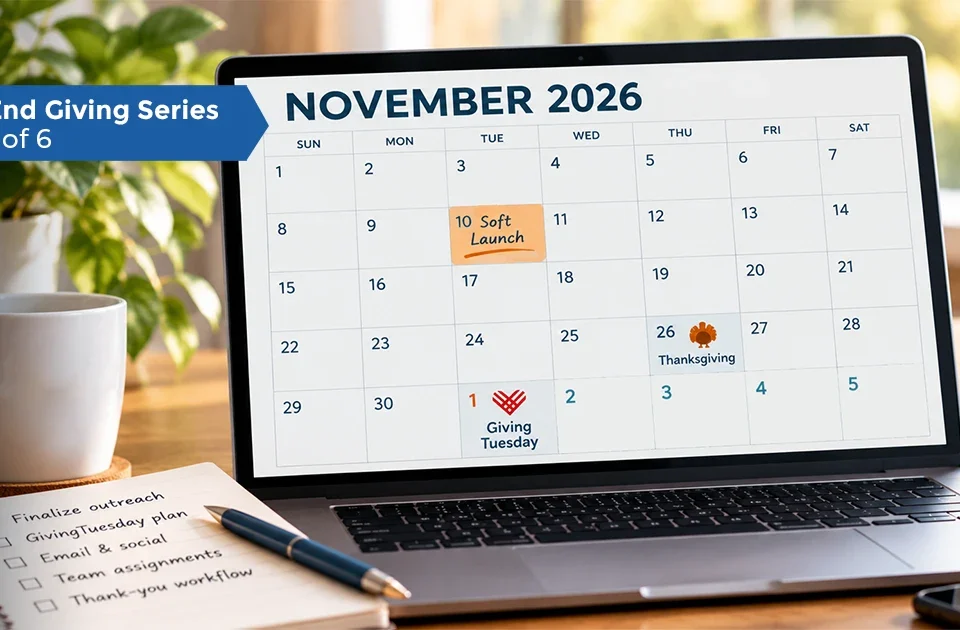
Next up in this series: November — Soft Launch and GivingTuesday, where the campaign goes live and the pace picks up considerably.