Author: Jay Perdue
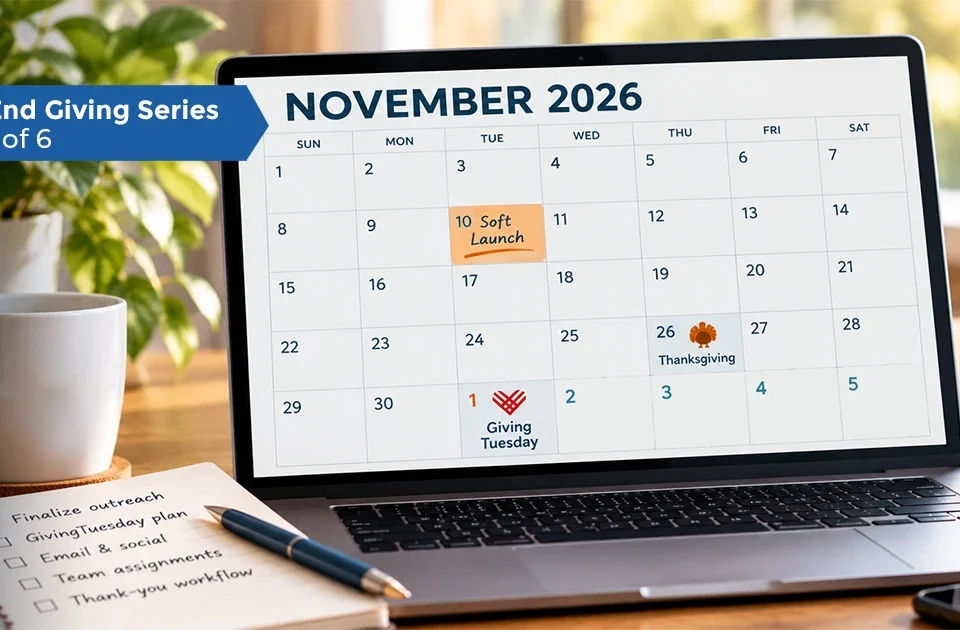
Your year-end marketing calendar should do more than tell your team what goes out and when. It should help you coordinate what you’re saying, who you’re saying it to, where you’re reaching them and what you want them to do next.
As you map your year-end communications, start with the donor segmentation work you’ve already done. Then build a calendar that moves those audiences through a thoughtful progression of messages—from connection and impact to invitation, urgency and gratitude.
Here are a few guidelines to help.
Start With Your Audiences, Not Your Dates
Your year-end audience isn’t one group called “donors.” Just like the saying goes, “Try to be all things to all people, and you’ll end up being nothing to no one.”
You may be communicating with longtime supporters, recent donors, lapsed donors, monthly donors, volunteers, major-gift prospects, corporate partners and people who have engaged with your organization but haven’t yet made a gift. Those audiences don’t necessarily need the same message.
A longtime donor might appreciate seeing what their continued support has helped accomplish. Someone who hasn’t given recently may need to be reminded why they connected with your organization in the first place. A newer supporter may need more context about your mission and the impact of a gift. And your most important donors and prospects may warrant personal outreach rather than simply receiving the same automated campaign communications as everyone else.
If you’ve already segmented your donor list, put that work to use. Make audience segment one of the first columns in your marketing calendar.
Give the Season a Story Arc
Rather than filling your calendar with a series of appeals, think about how the conversation should change as year-end approaches.
September and October: Connect and Demonstrate Impact
Use early communications to reinforce why your work matters. Share impact, progress, stories and tangible examples of what donor support makes possible. As the season progresses, begin connecting what you’ve accomplished with what comes next. What needs to happen? Who will benefit? What could additional resources allow your organization to do?
November: Invite Participation
Now your communications can become more explicit about the opportunity to give. Introduce your year-end campaign through the channels appropriate for each audience. Direct mail might tell the fuller story. Email can reinforce it with a clear path to give. Social media can highlight individual stories, images, statistics or moments. Your website should carry the campaign through to the giving experience.
Giving Tuesday can be part of this stage, but it doesn’t have to dominate it. Think of it as one opportunity within the larger year-end conversation rather than the campaign itself.
December: Build Momentum and Urgency
As December progresses, communications may become more frequent—but they shouldn’t simply become more repetitive. Give people new reasons to pay attention. Share progress toward your goal. Tell another impact story. Thank those who have already participated. Answer a question about giving. Show what a particular gift amount can accomplish.
As December 31 approaches, deadline-driven messages become appropriate. But urgency should be the final chapter of your story, not the entire story.
January: Close With Gratitude
Don’t let your marketing calendar end on December 31. Plan how you’ll acknowledge gifts, thank supporters and report back on what they collectively helped accomplish. Identify donors who warrant personal outreach and consider how you’ll continue the relationship into the new year. Year-end fundraising isn’t only about finishing December with more gifts. It’s an opportunity to being January with stronger donor relationships.
Match the Channel to the Audience and Message
An integrated campaign doesn’t mean publishing the same message everywhere at the same time. Think about the particular role each channel can play.
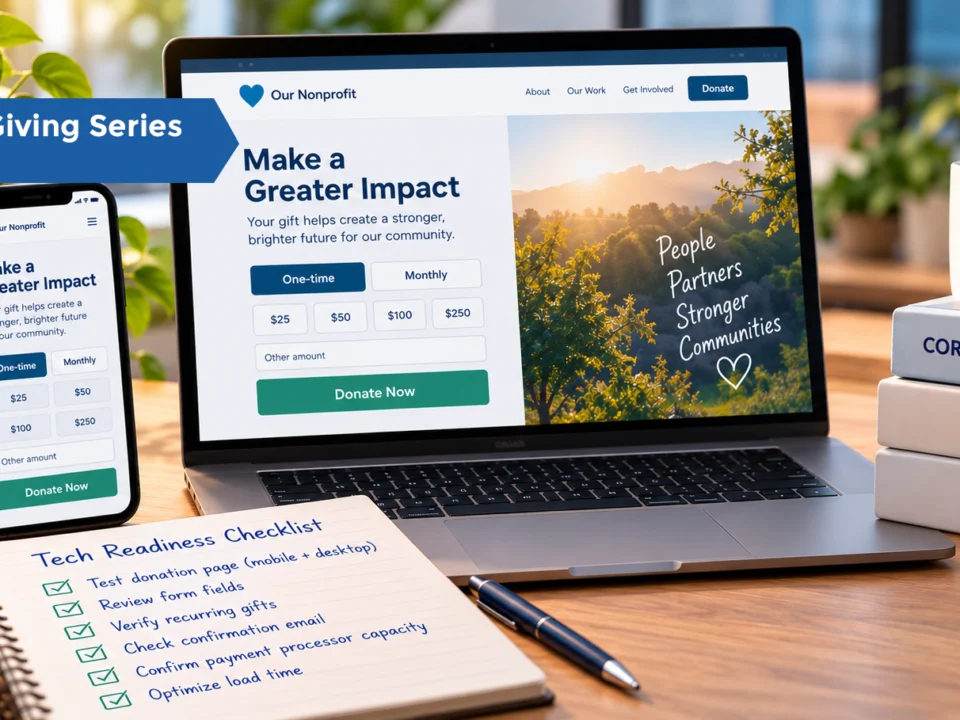
Email can carry stories, appeals, updates and reminders. Direct mail can provide a more tangible and personal experience. Social media can extend your storytelling and reach beyond your existing donor file. SMS can deliver concise, timely messages to opted-in supporters. Your website and donation page should reinforce the campaign and make taking action easy.
Major donors and key prospects may call for personal emails, phone calls or meetings. Paid digital advertising may help some organizations retarget audiences or extend the reach of campaign content.
You don’t have to use every channel. Choose the ones that make sense for your audiences and that your team has the capacity to execute well.
Give Every Communication a Job
For every item you put on your calendar, ask: What is this communication supposed to accomplish?
The answer doesn’t always have to be “get a donation.” A communication might be intended to:
- Reconnect
- Demonstrate impact
- Educate
- Inspire
- Invite
- Ask
- Update
- Remind
- Thank
This simple step can help prevent year-end messaging from becoming a string of increasingly urgent appeals. It also keeps the focus on the donor. Instead of asking, “What do we need to send this week?” ask, “What does this audience need to hear from us at this point in the relationship?”
Use One Calendar to Keep the Campaign Connected
Your marketing calendar should bring audiences, messages, channels and execution together in one place. For each planned communication, identify the date, audience, purpose, message or story, channel, call to action, owner and status. You may also want to note required assets, such as photography, video, graphics or landing pages.
Seeing the full campaign in one place makes it easier to identify gaps and unnecessary repetition. It can also help development, marketing and leadership teams see how their individual responsibilities contribute to the same donor experience.
Most importantly, use the calendar as a guide rather than a rigid schedule. If a story emerges, circumstances change or donors respond differently than expected, adjust. The goal isn’t to execute every square on a spreadsheet. It’s to create a coordinated year-end conversation that feels relevant to the people you’re asking to participate.
Start Building Your Year-End Marketing Calendar
To help put these ideas into practice, we’ve created a Year-End Giving Marketing Calendar template you can customize for your organization. Use it to map your audiences, messages, channels, responsibilities and deadlines—and keep the donor at the center of your year-end communications.
Download the free Year-End Giving Marketing Calendar template in either Microsoft Excel or Microsoft Word format.