Author: Kris Cole
Virtually every fundraiser has taken that call in the last week of December from a donor who wants to make an IRA gift “right now” — only to learn their custodian needs ten business days to process it, and the money won’t clear before the tax year closes. It’s one of the most avoidable disappointments in year-end fundraising, and it happens to good donors and good organizations every single year, mostly because nobody started the conversation early enough.
Qualified charitable distributions (QCDs) — gifts made directly from an IRA to a nonprofit — are one of the most donor-friendly giving tools available, and in 2026 they matter more than ever. But the single biggest risk to a QCD isn’t the donor’s intent. It’s the calendar.
What a QCD Actually Requires
A QCD lets an IRA owner age 70½ or older transfer up to $111,000 directly from their IRA to a qualified charity in 2026 (up from $108,000 in 2025), without the distribution counting as taxable income. For donors who are also subject to required minimum distributions, a QCD can satisfy some or all of that RMD — turning a mandatory withdrawal into a gift instead of a tax bill.
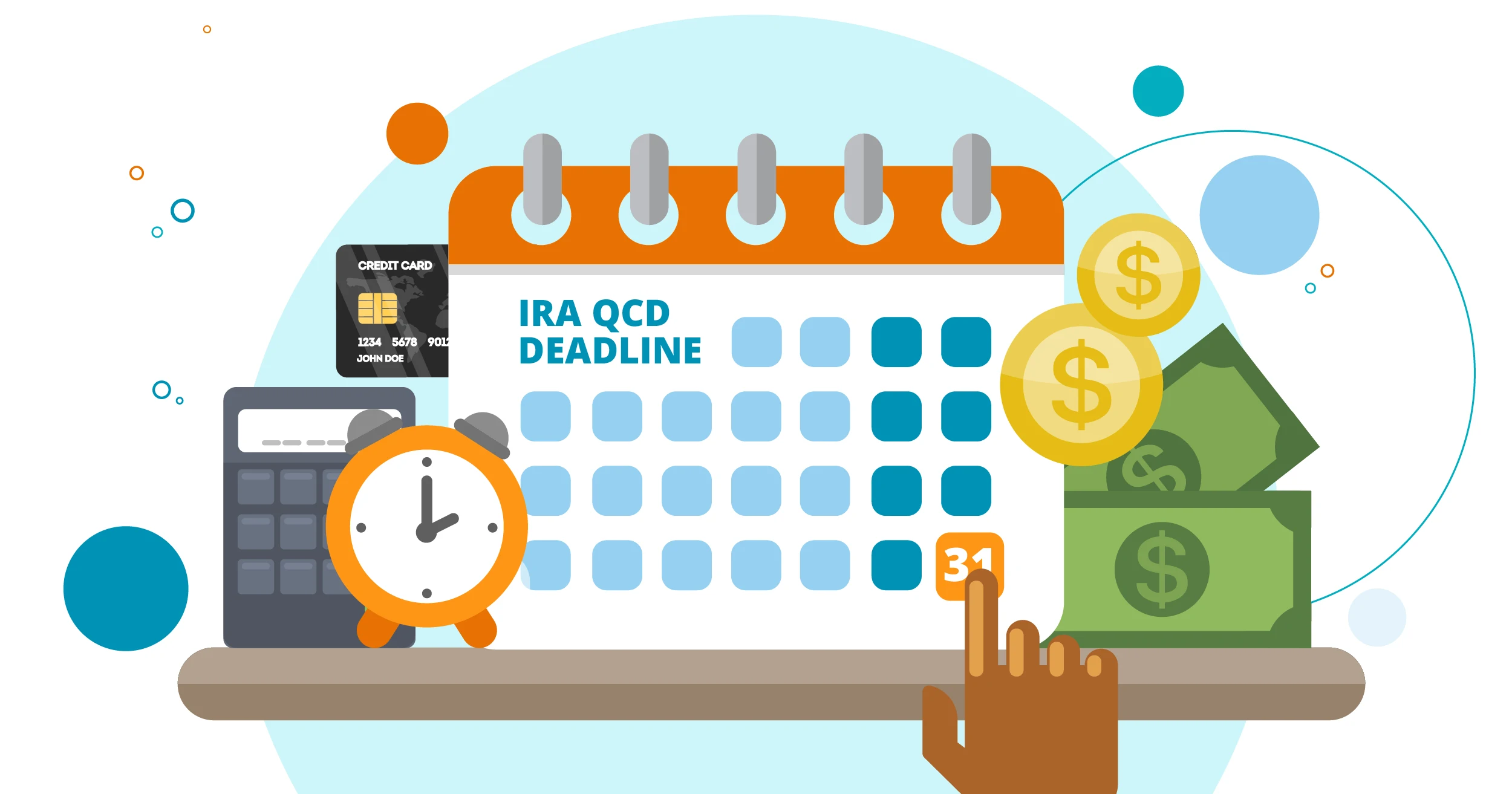
The catch: The funds must leave the donor’s IRA account and be received by the charity by December 31 — not merely requested, and not merely mailed. A check that’s postmarked December 30 but not chased until January doesn’t count. Neither does a transfer request submitted to a custodian on December 28 that doesn’t process until the new year. The IRS cares about when the money actually moves, not when the donor meant to move it.
Why 2026 Raises the Stakes
New tax rules taking effect this year make QCDs a genuinely better option for many donors than they were even a year ago — which is exactly the kind of thing worth telling them. Starting in 2026, itemizers can only deduct charitable gifts that exceed 0.5% of their adjusted gross income, and non-itemizers get a new but capped deduction (up to $1,000 for single filers, $2,000 for joint filers) for gifts made with the standard deduction. A QCD sidesteps both of these limits entirely, because it reduces taxable income directly rather than working through the deduction system at all. For a donor weighing a check against an IRA transfer this year, that’s a meaningfully different answer than it was in 2025.
This is genuinely userful information for donors — but it’s general education, not personalized tax advice, and donor communications should say so plainly. Every QCD conversation should point donors back to their own financial advisor or tax preparer to confirm what makes sense for their specific situation.
Building the Outreach Timeline Backward from Dec. 31
Because custodians — not charities — control how fast a QCD actually moves, the practical deadline for donor outreach is much earlier than the legal one. Here’s a useful way to think about it:
October: Identify and reach out to donors who have made QCDs before, and to prospects who are 70½ or older and have expressed interest in tax-smart giving. This is also the moment to update gift-acceptance language and any QCD-specific instructions (custodian mailing address, EIN, gift officer contact) on your website and in donor materials.
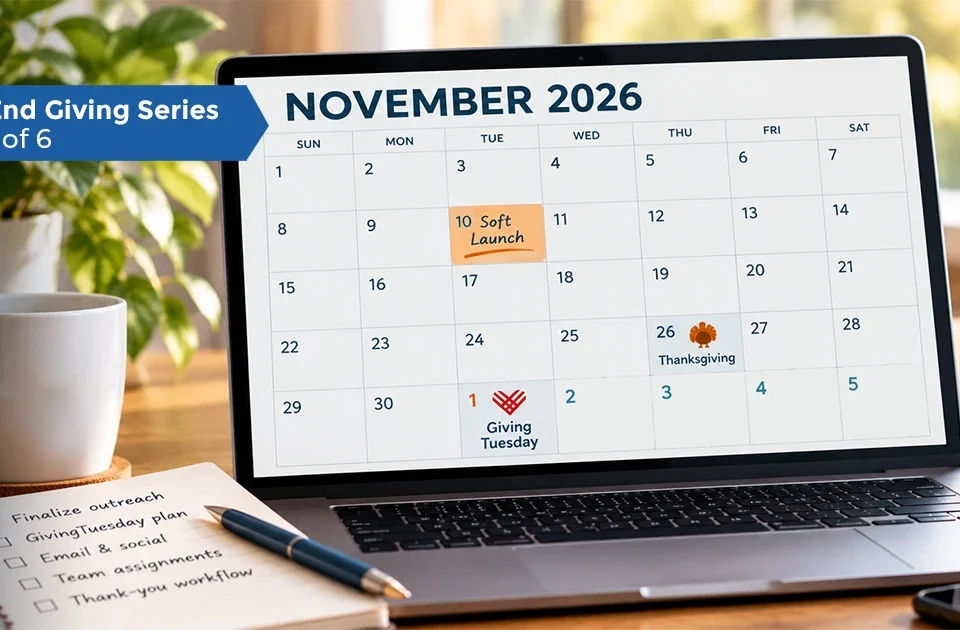
Early-to-mid November: Send a direct, dated reminder — ideally with a specific “please initiate by” date, not just “before year-end.” Many custodians recommend starting the request several weeks ahead of the holidays, since processing volume spikes in December and staffing often thins out around the holidays themselves.
December, first two weeks only: This is the window for last-call reminders and one-to-one problem-solving with donors who haven’t yet initiated a transfer. By the third week of December, the realistic message shifts from “you can still do this” to “let’s talk about January instead” — a harder conversation, but a more honest one than letting a donor’s gift fail silently.
A Story from the Field: Turning a Repeat Donor Into a Rallying Point
Here’s where the QCD conversation can go beyond deadline management, if you let it.
I once worked with a donor who gave a five-figure gift every single year, always as an IRA rollover, always right on schedule. He was the kind of donor a fundraiser could set a watch by — reliable in the best way. But reliable can quietly become invisible, too. It’s easy to treat a donor like that as a transaction to process rather than a relationship to build on.
He also happened to be a former board president. So instead of simply confirming his usual gift when I sat down with him to build that year’s EOY plan, I asked him to lead it. He put up $25,000 of his own QCD as a challenge, and asked the rest of the board to match it collectively — another $25,000, cumulative — for a $50,000 match pool anchoring the year-end campaign.
The results spoke for themselves: EOY gifts rose 45% that first year, and 60% the year after, once the match became something donors anticipated. There was an unplanned side effect worth naming honestly, too — board giving went up noticeably, and not entirely out of pure generosity. More than one board member admitted, half-joking, that they didn’t especially want to be the reason the group fell short of a challenge their own former president had put his name on.
The lesson isn’t really about QCDs specifically. It’s that a donor who gives the same gift the same way every year isn’t just a dependable line in the budget — they may be a potential leader, connector, or challenge-giver, if someone actually asks. A QCD check-in already requires a real, individual conversation, too. Don’t waste it just confirming a routine gift.
A Donor Communication Checklist
- Confirm your organization’s legal name, EIN, and any custodian-specific gift instructions are current and easy to find.
- Send QCD-specific outreach separately from general year-end appeals — this audience needs deadline and mechanics information, not just a case for giving.
- Give a firm “initiate by” date in every reminder, at least two to three weeks ahead of December 31.
- Flag to major gift officers and the finance team which donors have IRA gifts in motion, so an unusually large, unexplained deposit in late December doesn’t get miscoded or its acknowledgment delayed.
- Acknowledge QCD gifts promptly and correctly — the donor needs documentation for their tax filing, and it should explicitly confirm no goods or services were received in exchange for the gift.
- Include a brief, plain reminder in every QCD communication that donors should confirm details with their own tax advisor before initiating a transfer.
A QCD is one of the easier gifts to get wrong — not because donors don’t want to give this way, but because the mechanics move slower than the goodwill behind them. Starting the conversation in October instead of December is the difference between a donor’s generosity landing on time and a well-intentioned gift quietly missing its window. But getting the mechanics right is really just the floor. The donors who give the same reliable QCD every year are often exactly the ones worth asking a bigger question — not just “will you give again,” but “will you lead this year’s giving?” Sometimes the answer turns a routine gift into a $50,000 match and the best fundraising year the organization has ever had.